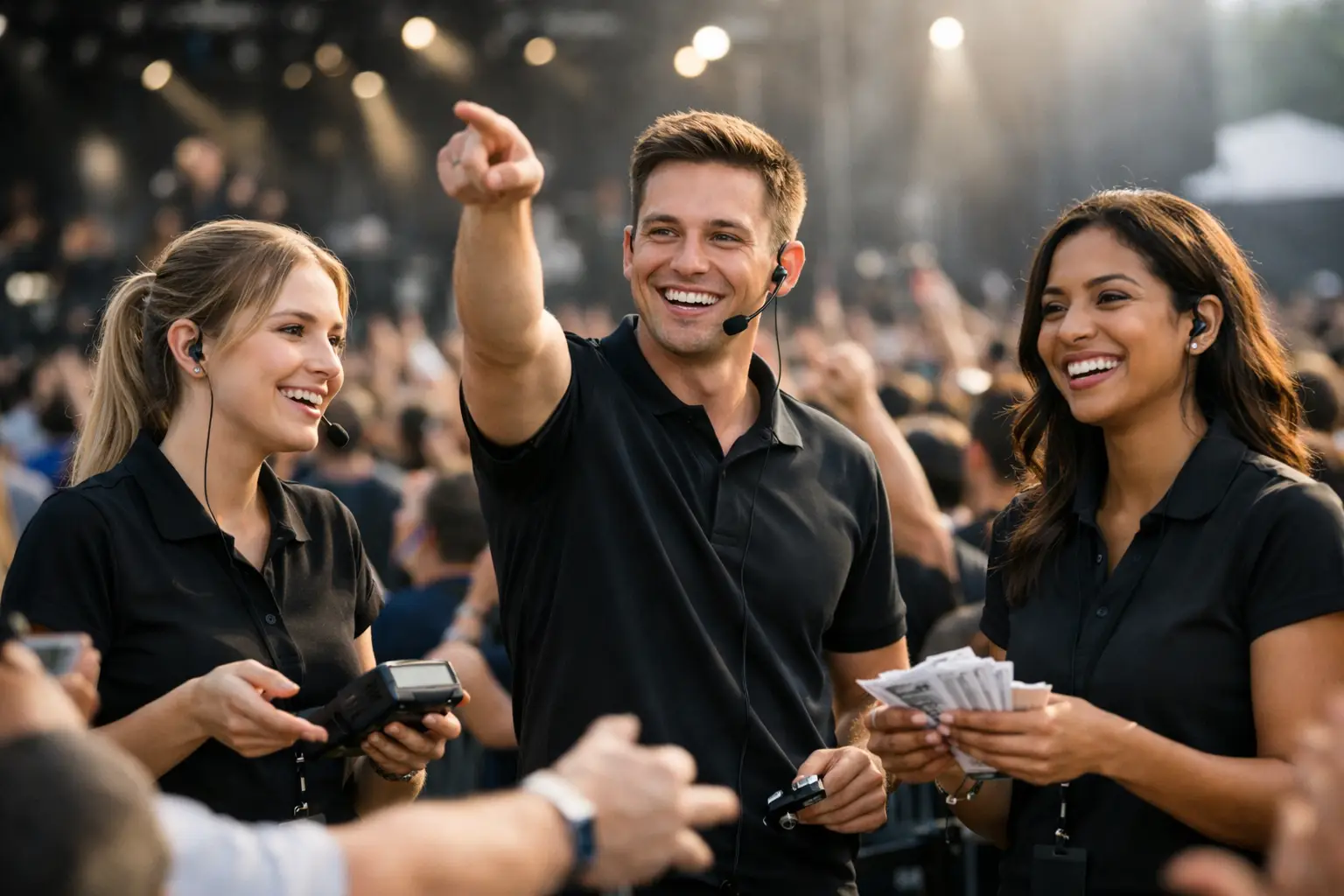
A packed event floor can look like a win while delivering very little commercial value. Footfall is not a pipeline. A queue at the stand is not proof of demand. The difference is made by live event sales staff who can turn passing interest into a real conversation, a qualified next step and, where the moment is right, a sale.
For growth-focused brands, live events offer something digital channels increasingly struggle to create: undivided human attention. But attention is expensive. Floor space, travel, stock, sponsorship and activation build-up all add pressure to perform. The people representing the brand cannot simply be friendly faces. They need a clear playbook, the confidence to approach, and the discipline to measure every meaningful interaction.
Why live event sales staff change the result
Events compress the sales journey. In a matter of minutes, a trained representative can establish rapport, understand a prospect’s needs, overcome an objection and secure an action. That could mean a product sale, a booked consultation, a retail visit, a partnership conversation or consent for a properly qualified follow-up.
This is not about stopping everyone who walks past. High-performance event teams know that a broad smile without a purpose creates noise, not growth. The stronger approach is targeted and observant. Who is slowing down? Who is comparing products? Who is attending with purchasing authority? Who is already using a competitor? Each signal helps the team choose the right opening and use the customer’s time well.
For B2C brands, the commercial upside is immediate. Demonstrations create belief faster than a product page, especially where taste, feel, fit or performance matter. For B2B teams, an event can create access to senior decision-makers who would never respond to another cold email. Real people. Real conversations. Real growth.
The trade-off is that live selling exposes weak preparation quickly. An under-briefed team can damage credibility in front of exactly the audience a brand has paid to reach. That is why staffing should be treated as a revenue decision, not an administrative one.
Build the live event sales staff playbook before doors open
The best event teams do not arrive hoping energy will carry the day. They know the objective, the audience and the next action they are driving. A brand launching in a new territory may prioritise awareness and high-quality lead capture. A retailer with stock on site may focus on transactions and repeat visits. A B2B provider may want fewer conversations, but with a tighter definition of seniority, need and buying timeline.
Those goals require different behaviour on the floor. Setting one vague target such as “get leads” gives staff too much room to interpret success. A sharper brief defines what qualifies as a lead, which data is essential, when a prospect should be handed to a specialist, and what follow-up promise the team can genuinely keep.
Give representatives a reason to believe
People cannot represent a proposition they do not understand. Before the event, every representative should be able to explain the offer in plain language, identify the customer problem it solves and demonstrate the value without relying on a script.
Product knowledge matters, but belief matters too. Customers can sense when a representative is reciting a memorised pitch. The strongest teams use a framework rather than rigid wording: open naturally, ask a relevant question, listen properly, connect the answer to the offer, then ask for the next commitment.
That framework protects brand consistency while allowing personality to do its job. It also gives newer team members a route to confidence. Rookies should not be left to learn in the middle of a crowded exhibition hall. They need rehearsal, live coaching and clear standards from the first shift.
Design the stand around conversations, not decoration
A beautiful stand can still create a barrier. Tall counters, cluttered displays and staff hiding behind tablets all make the first interaction harder. The best layouts create room for approach, demonstration and a private enough conversation to qualify interest without shouting over the crowd.
Think in zones. One part of the space should attract attention. Another should let people experience the product or proposition. A third should support conversion, whether that means payment, booking or a more detailed consultation. Staff positioning should match those zones, with one team member ready to greet, another able to demonstrate and a closer available when the conversation reaches a decision point.
This does not require a large crew at every event. A smaller, well-drilled team can outperform a bigger team with no ownership. The right number depends on footfall, the length of the sales conversation, the complexity of the offer and the volume of demonstrations required. When queues form, it may be a sign of demand. It may also mean the team has created a bottleneck.
Coach for the moments that decide conversion
Event selling is fast, but it should never feel rushed. Great representatives read the room. They know when someone wants a quick answer and when they need space to ask questions. They also understand that objections are not rejection. A question about price, contract length or product suitability is usually an invitation to provide better context.
Managers should coach specific moments rather than offering vague encouragement. Review how the team opens conversations. Listen to the questions being asked. Check whether staff are explaining benefits before features. Watch how they ask for the sale or appointment. These small actions decide whether an activation produces a stack of incomplete forms or a reliable commercial return.
A useful event rhythm combines short pre-shift huddles with rapid floor feedback. Celebrate a strong conversion in the moment, but also correct drift immediately. If staff begin speaking only to easy prospects, spending too long with non-buyers or skipping qualification questions, reset the standard before the next rush.
Competition can lift performance when it is handled well. Friendly scoreboards, individual targets and team challenges create momentum, but they must reward quality as well as volume. Otherwise, representatives chase names rather than opportunities. Champions do not just fill the sheet. They create outcomes that survive contact with the sales team afterwards.
Measure more than scans
Badge scans and email captures are useful only when they reveal something commercially meaningful. A strong measurement plan tracks the entire route from first approach to revenue. That means recording footfall near the activation, conversations started, demonstrations completed, qualified leads, appointments booked, sales made and follow-up outcomes.
The most valuable metric will depend on the campaign. A premium B2B service should not judge success by the same rules as a consumer sampling campaign. For one brand, a small number of meetings with decision-makers can justify the investment. For another, the score is transactions per hour, average basket value and the number of customers who return to purchase again.
Quality control belongs in the data too. Are contact details accurate? Did staff capture the pain point, decision timeframe and preferred follow-up method? Are particular opening lines producing better conversations? This is where field activity becomes a repeatable growth engine rather than a one-off event report.
Playbook Direct approaches field operations with that discipline: human connection on the frontline, backed by conversion tracking and performance coaching behind it. The goal is not to make an event look busy. The goal is to make every territory, team and customer interaction work harder.
Protect the brand when the pressure rises
Live events are unpredictable. Stock can run low, a competitor may be metres away, weather can affect outdoor footfall, and an unexpected rush can test even experienced staff. Brand-safe execution means preparing for those realities before they happen.
Representatives need clear boundaries on pricing, claims, escalation and data handling. They should know how to respond when the answer is “I do not know” without losing confidence or inventing an answer. Honesty earns trust. A quick route to a manager or product expert is better than a promise the brand cannot keep.
Presentation matters as well. Dress, posture, language and energy all communicate the standard behind the product. That does not mean every representative should sound identical. It means each person understands the brand’s character and can bring it to life with professionalism, warmth and control.
Turn event momentum into territory growth
The event is only the opening whistle. The follow-up process determines how much of that momentum becomes revenue. Leads should be categorised while the interaction is fresh, assigned quickly and contacted according to the promise made on the stand. A prospect who asked for a call tomorrow should not receive a generic message next week.
Share field intelligence with the wider sales and marketing teams. The phrases customers use, the objections that recur and the competitor claims being heard on the floor are valuable market signals. They can sharpen future campaigns, improve training and help a brand decide where to expand next.
The strongest live event teams leave with more than a lead total. They leave with clearer customer insight, stronger local presence and a repeatable route to growth. Put capable people in front of the right audience, give them a disciplined playbook, and let every conversation earn its place on the scoreboard.