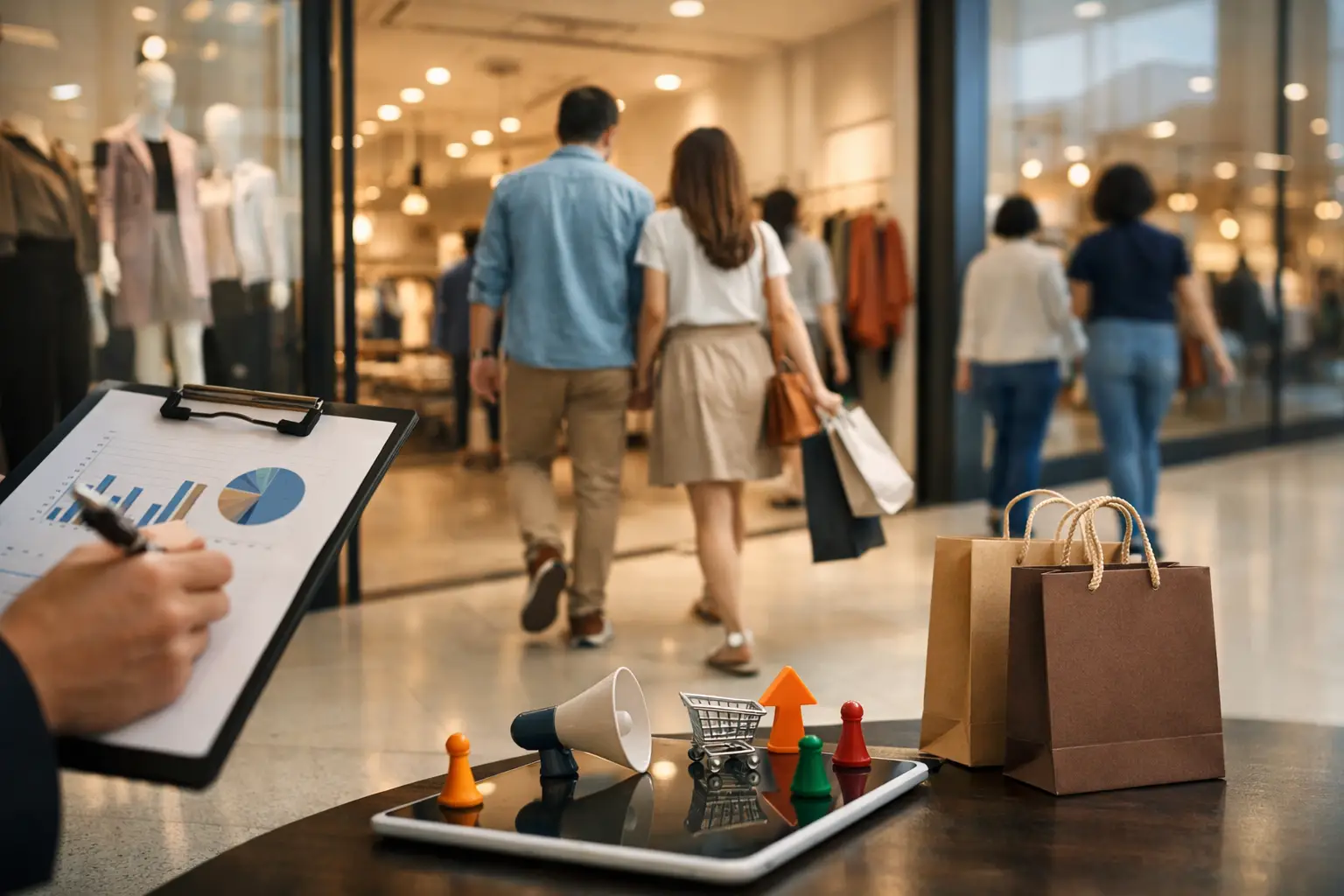
A quiet shop floor is rarely fixed by a louder window poster. If you want to know how to increase retail footfall, start with the real issue: people need a reason to change direction, cross the threshold and give your brand their time. That happens when visibility, relevance and human connection work as one.
Retail operators are competing for attention against phones, home delivery, packed diaries and endless choice. A strong product still matters. So do location and price. But the brands winning the high street are creating moments that feel worth showing up for, then measuring what turns interest into sales.
How to Increase Retail Footfall Starts Before the Door
Footfall is not just a property metric. It is the first stage of a commercial performance pipeline. More people passing by is useful; more of the right people entering, engaging and buying is the real win.
That distinction should shape every decision. A discount may bring a short spike in visitors but erode margin or attract shoppers with no reason to return. A premium in-store experience may reach fewer people at first, yet create stronger conversion, repeat visits and word of mouth. The best play depends on your objective, your catchment and what customers need to believe before they buy.
Before launching activity, establish a baseline. Track daily visits by time and location, entry rate, dwell time where available, conversion rate, average transaction value and repeat customer signals. Then compare performance against weather, local events, paydays, competitor activity and staffing levels. Champions do not guess what changed the score. They review the game tape.
Eight Plays That Bring the Right People In
1. Put people where attention already is
Do not wait for customers to find you. Take trained brand representatives into the places your audience already spends time: busy pedestrian routes, nearby workplaces, transport hubs, complementary retailers, campuses and community events. The goal is not to interrupt everyone. It is to start relevant conversations with people who have a credible reason to visit.
A field team can explain an offer, answer objections and direct people to a nearby location in a way signage cannot. For a new store opening, this activity can build local awareness quickly. For an established site, it can reintroduce the store to shoppers who have walked past for months without noticing what has changed.
2. Make the first ten seconds count
Customers decide quickly whether entering feels easy, useful or awkward. Your frontage, welcome and first visible message must answer a simple question: why now?
That could be a limited product trial, a live demonstration, expert advice, a personalisation station or a genuinely valuable local offer. Avoid vague promises such as “big savings inside”. Be specific about what visitors will get and who it is for. Clear beats clever when people are making a split-second decision on a crowded high street.
The entrance also needs operational discipline. A cluttered threshold, empty welcome zone or team members focused on stock rather than people can waste the attention your campaign has earned.
3. Give shoppers an experience they cannot get online
E-commerce wins on speed and convenience. Physical retail must win on feeling, confidence and participation. Product launches, workshops, mini consultations, demonstrations and hands-on challenges give people a reason to visit rather than scroll.
The experience does not need to be expensive or theatrical. It needs to fit the brand and solve a real customer question. A beauty retailer might offer shade matching. A technology brand may run guided trials. A food operator could host tasting sessions at peak local trading times. The common thread is direct participation, not passive display.
Build a simple route from experience to purchase. If guests leave entertained but unclear on the next step, the activation has created noise rather than commercial momentum.
4. Turn local partnerships into a territory strategy
One shop cannot own a neighbourhood alone. Build relationships with organisations that already have the trust of your potential customers: gyms, offices, colleges, hospitality venues, resident groups and complementary businesses.
The strongest partnerships create mutual value. A café may promote a nearby retailer’s event in return for a relevant in-store offer. A business district activation can give workers a useful reason to visit during lunch while helping the retailer identify a new repeat audience. Treat each partnership as a territory play, with a clear audience, a shared message and an agreed way to judge results.
This is where relationship development earns its place. One trusted introduction can outperform hundreds of untargeted leaflets.
5. Use offers as a reason to act, not a permanent crutch
An offer can move people from interest to action, especially when tied to a store visit, event or launch period. But constant discounting trains customers to wait and makes it harder to protect value.
Give the offer a purpose. It might reward people who attend a demonstration, bring a friend, visit during a quiet trading window or try a new category. Time limits can create urgency, but they must be credible. A weekly “last chance” sign is not urgency. It is background noise.
Test whether the offer brings new customers, increases spend or simply gives existing buyers a lower price. Those outcomes require different decisions.
6. Train frontline teams to convert conversation into confidence
Footfall generation and in-store service should not operate as separate teams with separate goals. The customer sees one brand. If a street team creates excitement but the store team does not know the offer, momentum disappears at the door.
Equip every representative with the same core message, qualification questions and handover process. They should know how to listen before they pitch, recognise intent and recommend a relevant next step. High performance is not about delivering a louder script. It is about reading the person in front of you.
At Playbook Direct, that principle sits at the heart of field activity: real people, real conversations and accountable commercial outcomes. The right team protects the brand while making every interaction count.
7. Design activity around local trading patterns
A play that works in a city centre may fail in a retail park. Commuter-heavy locations can reward morning and evening activation. Family destinations may perform best at weekends. Office areas may need a sharp lunchtime proposition, while university towns can respond to term-time events and peer-led energy.
Study the rhythm of each territory before deploying people and budget. Look at nearby anchors, public transport, competing venues, school holidays, local fixtures and weather exposure. Then put your strongest activity where demand and opportunity overlap.
This approach also prevents a common mistake: judging a campaign on total visitor numbers alone. Fifty well-qualified visits during the right window can be worth more than five hundred casual passers-by at the wrong time.
8. Measure the full route from street to sale
If you cannot connect activity to outcomes, you cannot scale it with confidence. Set up practical tracking before the campaign begins. Use unique event codes, QR codes where appropriate, team referral cards, timed offer windows, till prompts or simple customer-source questions. No single method is perfect, so use more than one signal.
Review results daily during active campaigns. Which locations generate entries? Which representatives start the most qualified conversations? Which message produces the strongest conversion? Where do visitors drop out? Fast feedback lets you shift resource while the opportunity is still live.
The scoreboard should include more than footfall: cost per visit, conversion rate, revenue per visitor, average basket value, customer sign-ups and repeat behaviour all show whether the activity is building sustainable growth.
Build a Retail Footfall Plan That Can Be Repeated
The most effective retail growth programmes are not one-off stunts. They are repeatable operating systems. Start with a focused test in one territory, one audience segment and one clear proposition. Give the team a defined target, a consistent briefing and enough time to learn. Then refine the message, location and timing based on evidence.
Keep the handover between field activity and store operations tight. A daily huddle can surface what customers are asking, where objections are appearing and which products are drawing attention. Those insights improve both the next day’s conversations and the in-store experience.
There is a trade-off between scale and control. Expanding quickly can build reach, but only if training, brand standards and reporting travel with the campaign. Better to dominate a few high-potential zones with disciplined execution than scatter activity across a city with no clear accountability.
Retail footfall grows when customers feel that visiting your store will give them something a screen cannot: a useful answer, a memorable experience, a confident recommendation or a reason to belong. Put your best people on the front line, give them a clear playbook and let every conversation earn the next visit.